
The final few months of the year can be busy for small business owners. Between managing everyday operations, preparing for the holidays, and planning for the year ahead, bookkeeping can easily slip down the priority list. But getting your books organized before December 31 can make a big difference in how smoothly you enter tax season.
The good news? You don't need to wait until the end of the year to start preparing. A little attention to your numbers now can help you catch mistakes, understand where your business stands, and avoid spending January trying to piece everything together.
Here's where I'd start.
1. Catch Up on Your Bookkeeping Before December
Before you can make financial decisions for the rest of the year, you need to know that your books are accurate.
Start by reviewing your bank and credit card transactions. Make sure everything has been recorded, categorized correctly, and reconciled through the most recent available statements. Look for duplicate transactions, missing expenses, outstanding checks, and transfers that may have been recorded incorrectly.
If you're using QuickBooks Online, remember that connecting your bank accounts doesn't mean your bookkeeping is automatically complete. Transactions still need to be reviewed, and your accounts need to be reconciled against actual statements.
If your books have fallen behind, you're certainly not alone. You can read more about where to start in my article, Are Your Books Behind?.
2. Review Your Financial Reports
Once your accounts are reconciled, it's time to look at what your numbers are telling you.
Your financial reports aren't just something you hand over to your tax preparer once a year. They're tools that help you understand how your business is performing and make decisions while there's still time to act.
Here are four reports worth reviewing before year-end:
Profit and Loss Statement: Shows your income, expenses, and profitability over a specific period.
Balance Sheet: Provides a snapshot of what your business owns, owes, and has in equity.
Accounts Receivable and Payable Reports: Help identify unpaid customer invoices and outstanding vendor bills.
Cash Flow Statement: Helps you understand how money is moving in and out of your business.
Pay particular attention to unusual balances, expenses that seem higher than expected, and invoices that have been outstanding for too long.
If you're not sure how often you should be reviewing these reports, I cover that in How Often Should You Be Looking at Your Numbers?.
3. Revisit Your Budget and Cash Flow
Your budget probably looked a little different at the beginning of the year than it does today. That's normal. Businesses change, expenses fluctuate, and sometimes revenue doesn't follow the plan.
Compare your year-to-date income and expenses against your original budget. Are there areas where you're consistently overspending? Are there subscriptions or services you're no longer using? Have your operating costs increased without a corresponding increase in revenue?
It's also worth looking ahead at upcoming expenses, including payroll, vendor payments, taxes, and any seasonal changes in revenue.
The goal isn't to cut every expense before December. It's to understand what your business can comfortably afford and make intentional decisions instead of reacting to a cash shortage later.
For additional guidance, read Cash Flow Tips for Business Owners During the Holiday Season.
4. Double-Check Your Sales and Payment Processing
If your business uses a point-of-sale system like Square, Shopify, or another payment processor, this step is especially important.
Your sales reports and bank deposits don't always match dollar for dollar. Processing fees, refunds, sales tax, tips, and payout timing can all affect the amount that actually reaches your bank account.
Review your sales activity and make sure your accounting software is recording the full picture, not just the deposits.
For example, a $1,000 deposit doesn't necessarily mean your business earned exactly $1,000 in sales. There may have been processing fees deducted before the money reached your account.
These differences can add up over several months. Taking the time to reconcile your payment processors now can save you from a much larger cleanup project later.
5. Start Preparing for 1099s
If your business paid independent contractors, freelancers, or certain service providers during the year, now is a good time to review those payments.
Start by checking which vendors have completed W-9 forms on file. Then review how much you've paid each contractor, how those payments were made, and whether the transactions have been categorized correctly.
For the 2026 tax year, the general Form 1099-NEC reporting threshold increased to $2,000 in reportable nonemployee compensation. However, not every payment above that amount requires a 1099. The type of vendor, payment method, and other reporting rules still matter.
Getting organized now means you're not chasing down missing information when January arrives.
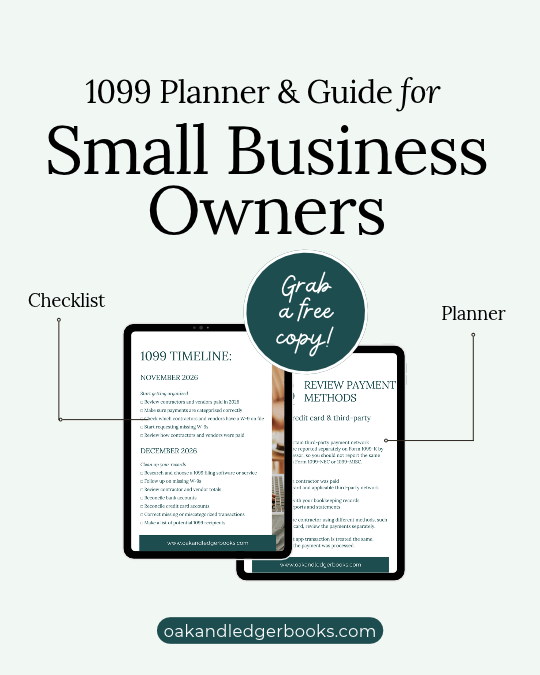
Free Download: 2026 1099 Planner & Checklist
Not sure where to start with 1099 preparation? I've put together a free guide to help small business owners get organized before filing season.
Inside, you'll find a month-by-month preparation timeline, W-9 checklist, important filing deadlines, and practical steps for reviewing contractor payments. It's designed to help you understand what needs your attention now, so you're not scrambling to figure everything out in January.
Enter your email below, and I'll send the guide straight to your inbox.
6. Organize Your Receipts and Financial Documents
Receipts and supporting documents have a way of disappearing when you need them most.
Before year-end, take a little time to review how you're storing business records. Make sure you have access to bank statements, credit card statements, loan documents, payroll reports, vendor invoices, and receipts for business purchases.
Ideally, these documents should be stored somewhere secure and easy to access, rather than scattered across inboxes, text messages, and desktop folders.
You don't need a complicated filing system. You just need one that you can consistently maintain.
If you're tired of manually forwarding receipts or searching through your inbox, you may enjoy Still Forwarding Receipts to Your Bookkeeper? There's an Easier Way.
7. Review Your Business Expenses Before Year-End
Before making any last-minute purchases, take a closer look at what your business has already spent this year.
Review your expense categories for transactions that don't belong, duplicate charges, personal purchases, and expenses that may have been recorded incorrectly. Make sure loan payments, equipment purchases, and other significant transactions are reflected appropriately in your books.
This is also a good time to talk with your tax professional about any planned purchases or tax-saving opportunities.
Buying something just because it's deductible doesn't automatically make it a good business decision. The expense still costs money, and its tax treatment depends on the circumstances.
For a more detailed walkthrough, read How to Review Your Business Expenses Each Month.
8. Build a Bookkeeping Routine That Lasts Beyond December
Year-end preparation is important, but the real goal is to make bookkeeping easier throughout the entire year.
When your accounts are reconciled regularly, your expenses are categorized consistently, and your financial reports are reviewed each month, December becomes much less overwhelming.
You don't have to spend hours every day managing your books. What matters is having a routine that fits your business, your transaction volume, and the way you operate.
And if you're not sure what that routine should look like, I've put together a resource to help.
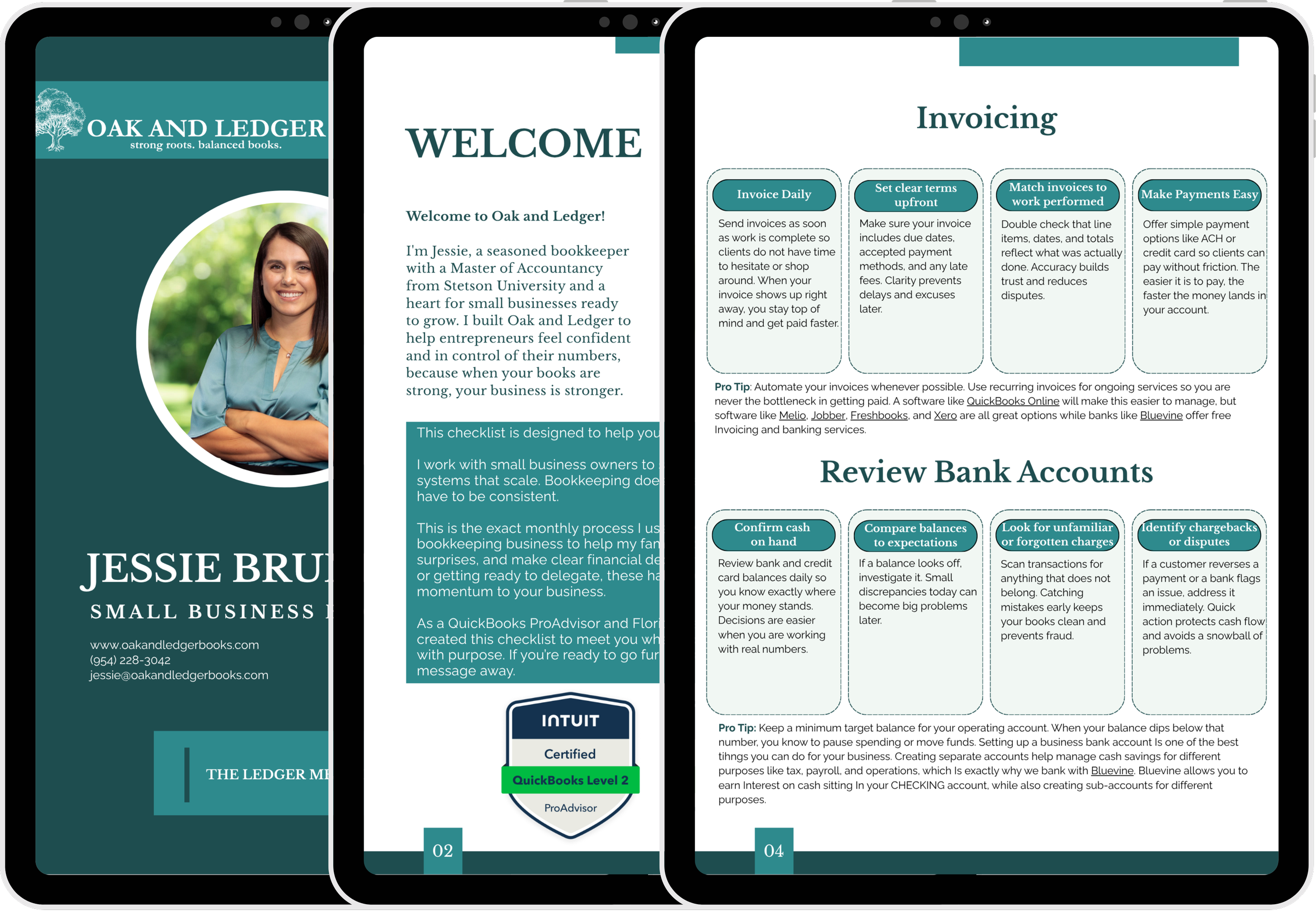
A Little More Structure for Your Books
Keeping your books organized shouldn't be something you only think about at tax time.
I created The Ledger Method, a free monthly bookkeeping checklist to help small business owners build a more consistent routine. It breaks down the daily, weekly, and monthly tasks that keep your accounts organized, your transactions reviewed, and your financial reports useful.
Whether you're managing your own books or preparing to hand them off, this guide gives you a practical place to start.
Finish the Year With Clarity, Not a Bookkeeping Backlog
Preparing your books for year-end isn't just about getting ready for taxes. It's about understanding where your business stands and having reliable numbers to make decisions for the year ahead.
You don't need perfect books overnight, and you don't need to tackle everything in one sitting. Start with your reconciliations, review your reports, organize your records, and work through what's outstanding.
And if you'd rather spend your time running your business instead of sorting through transactions, that's where I come in.
At Oak and Ledger, I work directly with small business owners to keep their bookkeeping accurate, organized, and up to date. Whether you're several months behind or simply ready to stop doing it all yourself, we can figure out the next step together.